×
- Hello
- Login or Register
- Quick Links
- Live Chat
- Track Order
- Parts Availability
- RMA
- Help Center
- Contact Us
- Shop for
- Lexus Parts
- Lexus Accessories


My Garage
My Account
Cart
Genuine 2004 Lexus RX330 Intake Manifold
Engine Intake Manifold- Select Vehicle by Model
- Select Vehicle by VIN
Select Vehicle by Model
orMake
Model
Year
Select Vehicle by VIN
For the most accurate results, select vehicle by your VIN (Vehicle Identification Number).
2 Intake Manifolds found
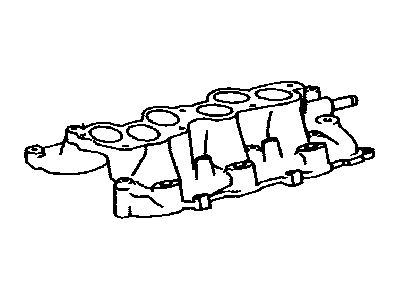
2004 Lexus RX330 Intake Manifold
Part Number: 17101-20070$340.79 MSRP: $472.38You Save: $131.59 (28%)Ships in 1-3 Business DaysProduct Specifications- Other Name: Manifold, Intake; Intake Manifold
- Replaces: 17101-0A050
- Part Name Code: 17111
- Item Weight: 8.60 Pounds
- Item Dimensions: 17.8 x 13.8 x 7.7 inches
- Condition: New
- Fitment Type: Direct Replacement
- SKU: 17101-20070
- Warranty: This genuine part is guaranteed by Lexus's factory warranty.
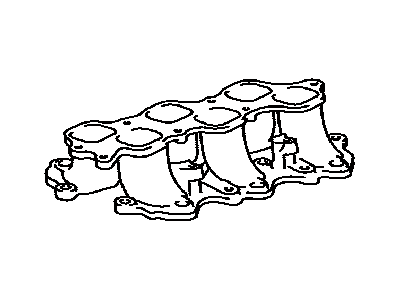
2004 Lexus RX330 Intake Manifold
Part Number: 17101-0A050$346.47 MSRP: $472.38You Save: $125.91 (27%)Ships in 1-3 Business DaysProduct Specifications- Other Name: Manifold, Intake
- Manufacturer Note: (L)
- Replaced by: 17101-20070
- Part Name Code: 17111
- Item Weight: 7.90 Pounds
- Item Dimensions: 17.8 x 13.7 x 7.9 inches
- Condition: New
- Fitment Type: Direct Replacement
- SKU: 17101-0A050
- Warranty: This genuine part is guaranteed by Lexus's factory warranty.
2004 Lexus RX330 Intake Manifold
Our website provides an extensive catalogue of genuine 2004 Lexus RX330 Intake Manifold at competitive prices. All OEM 2004 Lexus RX330 Intake Manifold we offer are backed by the manufacturer's warranty, assuring you of their quality, reliability, and durability. Our seamless return policy and speedy delivery service further enhance your shopping experience!
2004 Lexus RX330 Intake Manifold Parts Questions & Experts Answers
- Q:How to remove and install Intake Manifold in Four cylinder engine on 2004 Lexus RX330?Posted by Warren L.A:First thing to do for fuel system repairs on vehicles from 1999 to 2007 is to lower fuel pressure and disconnect the negative battery terminal cable. Take off the air intake duct and resonator, then get rid of the cowl cover. First, disconnect your fuel rail and injectors altogether. Afterwards, remove the throttle link from the intake manifold, along with the throttle body. While supporting the car, disconnect all the intake manifold hoses connected to the PCV and vacuum system, and take regular care of moving and labeling hoses. When repairing a 4WD model, first loosen the right hand drive axle nut as well as the right front wheel's locking nuts before lifting the car. Take off the oil in the transfer case and take out the right side driveaxle. Then, disconnect the transfer case mount from the transfer case and remove the transfer case mounting brace. At the bottom of the vehicle, detach lower mounting bolts of the manifold, and on top remove the bolts from the manifold's upper mounting nuts, taking out the manifold, gasket, and the manifold insulator from the engine. Before rebuilding, look for damaged gaskets amongst the intake and head joints, plus check both parts for straightness; replace if damaged is seen. Insert a brand new gasket into the grooves of the intake manifold and set it on top of the studs that go through the cylinder head. Take your time tightening the manifold-to-cylinder head bolts, spreading the force over three or four bouts while moving toward the edges to prevent warping. Put back all parts in opposite order; measure coolant level and refill if needed; fill transfer case with 4WD models; check throttle movement for steady response; then turn the engine to check for coolant and vacuum leaks.Answered by Lexus Parts Specialist Gregg / Jul 18, 2024
Related 2004 Lexus RX330 Parts
 2004 Lexus RX330 Exhaust Manifold Gasket
 2004 Lexus RX330 Catalytic Converter
 2004 Lexus RX330 Engine Cover
 2004 Lexus RX330 Air Duct
 2004 Lexus RX330 Exhaust Pipe
 2004 Lexus RX330 Air Intake Coupling
 2004 Lexus RX330 Catalytic Converter Gasket
 2004 Lexus RX330 Exhaust Manifold