×
- Hello
- Login or Register
- Quick Links
- Live Chat
- Track Order
- Parts Availability
- RMA
- Help Center
- Contact Us
- Shop for
- Lexus Parts
- Lexus Accessories


My Garage
My Account
Cart
Genuine Lexus ES300 Piston
Engine Pistons- Select Vehicle by Model
- Select Vehicle by VIN
Select Vehicle by Model
orMake
Model
Year
Select Vehicle by VIN
For the most accurate results, select vehicle by your VIN (Vehicle Identification Number).
11 Pistons found
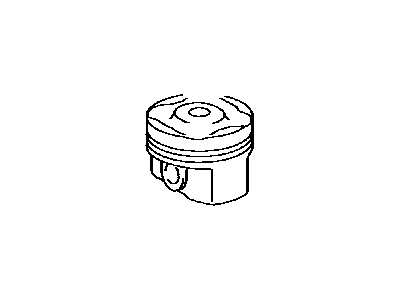
Lexus ES300 Piston Sub-Assembly With Pin
Part Number: 13301-20030$47.89 MSRP: $61.28You Save: $13.39 (22%)Ships in 1-3 Business DaysLexus ES300 Piston Sub-Assembly With Pin
Part Number: 13101-20030$125.65 MSRP: $171.31You Save: $45.66 (27%)Ships in 1-3 Business DaysLexus ES300 Piston Sub-Assembly With Pin
Part Number: 13101-20040$50.35 MSRP: $64.42You Save: $14.07 (22%)Ships in 1-3 Business Days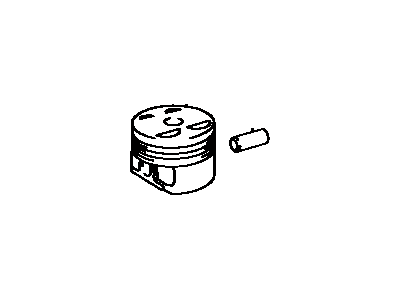
Lexus ES300 Piston Sub-Assembly With Pin
Part Number: 13101-20010$126.68 MSRP: $171.31You Save: $44.63 (27%)Ships in 1-3 Business Days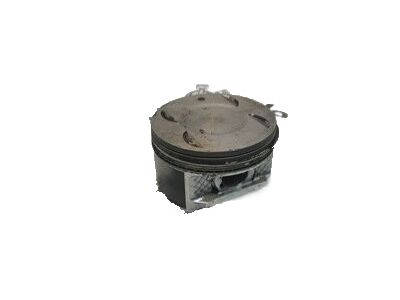
Lexus ES300 Piston Sub-Assembly With Pin
Part Number: 13101-20050$124.46 MSRP: $168.31You Save: $43.85 (27%)
Lexus ES300 Piston
Lexus ES300 Piston is designed to absorb explosive combustion forces and convert them to power in the forward direction. Inside the aluminum alloy body, Piston rings seal against the cylinder wall while a connecting rod connects the Piston to the crankshaft to convert the straight line thrust into rotation to feed the transmission to turn the wheels. Throughout the years, the ES300 has been based on cast or forged aluminum designs, where cast hypereutectic designs are seen for daily driving needs, and forged designs are applied for extra strength from higher loads. Both styles are still light but durable, an ideal combination for Lexus refinement. Coatings on each Piston skirt reduce friction and reflect heat to increase longevity, and the modern ring pack is thinner and reduces drag while improving the quality of the seal. Bore size, compression ratio, and valve clearance are the guiding specifications for selection, and many pin bores will accept floating wrist pins which are clipped into position. Earlier trunk-style pieces provided solid side support, while recent slipper patterns reduce mass to get the ES300 revving around freely. These advances guarantee a Piston that can withstand heat and pressure without noise, matching Lexus hallmarks of smoothness. Whether cruising an ES300 of the late nineties or an update of the 2000s, Lexus loads each engine with a precisely machined Piston with resilience.
Should you need to purchase new auto parts for your vehicle, we strongly suggest you consider the genuine Lexus ES300 Piston available on LexusPartsNow.com. Our OEM Lexus ES300 Piston come with the reassurance of the manufacturer's warranty, a hassle-free return policy, and speedy delivery service, all at affordable prices online. Feel free to shop with confidence!
Lexus ES300 Piston Parts Questions & Experts Answers
- Q:How to remove the piston/connecting rod assemblies on Lexus ES300?A:Prior to removing the piston/connecting rod assemblies, remove the Cylinder Head(s), the oil pan, and the oil pump pick-up tube. On four-cylinder engines only, remove the engine balancer assembly if not already done. Use your fingernail to feel if a ridge has formed at the upper limit of ring travel. If carbon deposits or cylinder wear have produced ridges, they must be completely removed with a special tool. After the cylinder ridges have been removed, turn the engine upside-down so the crankshaft is facing up. Before the connecting rods are removed, check the endplay with feeler gauges. Slide them between the first connecting rod and the crankshaft throw until the play is removed. Check the connecting rods and caps for identification marks. Loosen each of the connecting rod cap nuts 1/2-turn at a time until they can be removed by hand. Remove the number one connecting rod cap and bearing insert. To protect the crankshaft journals on four-cylinder engines, slip short pieces of rubber hose over the rod bolts before removing the pistons. Push the connecting rod/piston assembly out through the top of the engine. Repeat the procedure for the remaining cylinders. After removal, reassemble the connecting rod caps and bearing inserts in their respective connecting rods and install the cap nuts finger tight. Don't separate the pistons from the connecting rods.
Related Lexus ES300 Parts
 Lexus ES300 Radiator
 Lexus ES300 Radiator Cap
 Lexus ES300 Rod Bearing
 Lexus ES300 Crankshaft Pulley
 Lexus ES300 Flywheel
 Lexus ES300 Crankshaft
 Lexus ES300 Crankshaft Gear
 Lexus ES300 Crankshaft Thrust Washer Set
 Lexus ES300 Flywheel Ring Gear
 Lexus ES300 Harmonic Balancer
 Lexus ES300 Piston Ring Set